
Psychologie du parieur : Le jeu mental
 Available in US
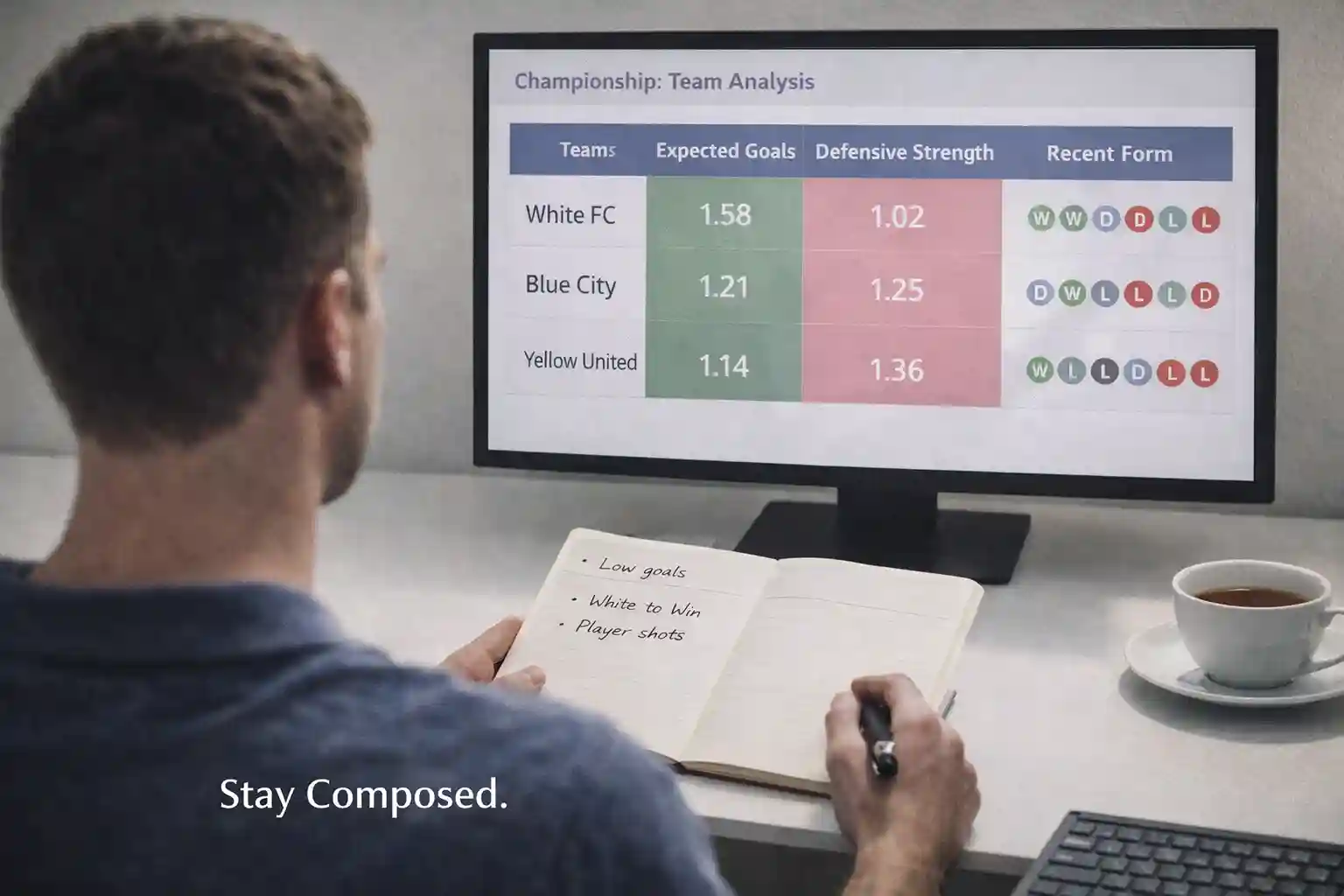
Betting psychology determines success or failure more than analytical skill for most Championship bettors. The most sophisticated analysis means nothing if emotional decision-making overrides rational conclusions. Understanding how psychological biases distort betting judgment, and developing strategies to counteract these tendencies, separates sustainable winners from the majority who eventually deplete their bankrolls despite occasional analytical insights.
What makes psychology particularly crucial for Championship betting is the division’s inherent unpredictability. Any team can beat any other. Favorites lose regularly. Underdogs produce upsets that seem obvious in hindsight. This variance creates emotional turbulence that poorly managed psychology transforms into destructive betting patterns. Those who expect variance and respond appropriately maintain discipline that emotional bettors cannot sustain.
The fundamental psychological challenge is accepting that correct decisions sometimes produce losing outcomes while incorrect decisions sometimes win. Evaluating betting based on process rather than outcome requires cognitive discipline that contradicts natural human tendencies. Developing this discipline proves essential for long-term success.
Use logic and data by exploring our Championship data analysis tools.
Table of Contents
Common Cognitive Biases in Betting
Several cognitive biases consistently affect betting decisions. Recognizing these biases helps counteract their influence on your Championship wagering.
Confirmation bias leads bettors to seek information supporting existing conclusions while dismissing contradictory evidence. If you’ve decided to back a team, you’ll notice statistics and analysis confirming your decision while overlooking warning signs. Actively seeking reasons why your selections might fail counteracts this tendency, though doing so requires conscious effort against natural inclination.
Recency bias overweights recent results relative to longer-term patterns. A team’s last two matches feel more significant than their previous twenty despite providing far less reliable information. This bias produces reactionary betting that chases form rather than identifying underlying quality. Maintaining awareness of sample size requirements helps counteract recency-driven decisions.
Availability heuristic makes vivid, memorable events seem more probable than they actually are. A dramatic last-minute winner you watched live feels more representative than it statistically is. These memorable moments distort probability assessment in ways that careful statistical analysis would avoid. Recognizing when vivid memories are influencing your probability estimates helps adjust appropriately.
Gambler’s fallacy suggests that random events somehow balance over time in ways that affect future probability. A team that’s lost several matches in a row isn’t more likely to win their next match simply because losses have accumulated. Each match represents independent probability unaffected by previous results. Understanding true probability independence prevents fallacy-driven betting.
Emotional Management Strategies
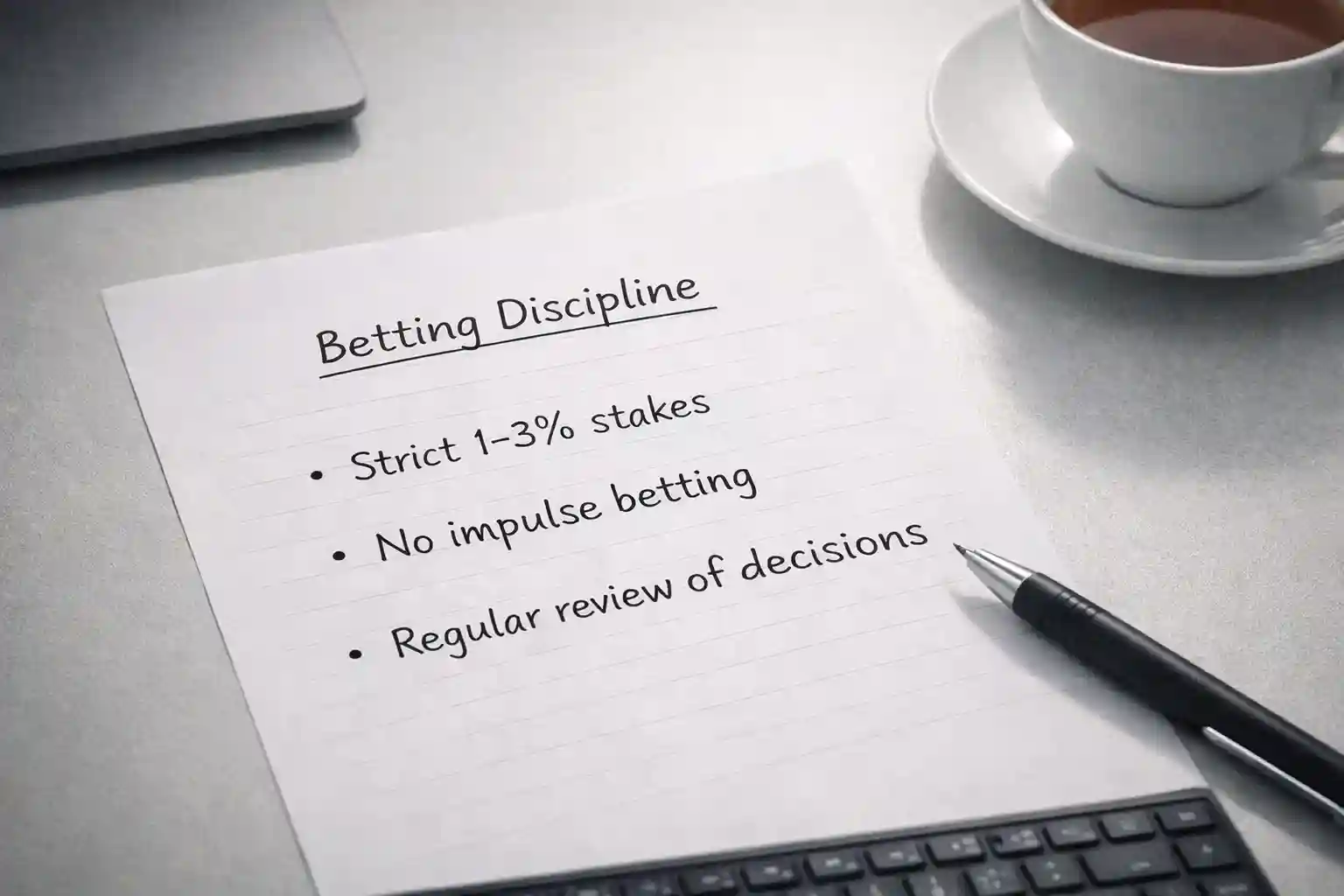
Betting inevitably produces emotional responses that, if unmanaged, corrupt decision-making. Developing strategies to recognize and manage these emotions improves betting quality.
Pre-commitment to betting rules removes emotional discretion from bet selection. Deciding in advance exactly what you’ll bet, at what stakes, under what conditions, eliminates in-the-moment decisions that emotions distort. Written rules that you commit to following regardless of circumstances provide structure that emotional volatility cannot undermine.
Cooling-off periods after significant wins or losses prevent emotional momentum from driving subsequent decisions. The euphoria following a big win or the despair after a painful loss both distort judgment. Stepping away from betting for specified periods after emotional triggers helps ensure future decisions reflect analysis rather than feeling.
Physical state awareness recognizes that hunger, fatigue, and stress all affect decision quality. Betting while tired or distracted produces worse decisions than betting while alert and focused. Scheduling betting activity for periods when you’re genuinely capable of quality analysis improves outcomes.
Social pressure resistance maintains independence from public opinion and peer influence. What others are betting shouldn’t affect your decisions unless their analysis provides genuine information. Developing comfort with positions that contradict popular opinion, when your analysis justifies such positions, enables value capture that conformity prevents.
Loss Aversion and Its Effects
Loss aversion, the tendency to feel losses more intensely than equivalent gains, produces specific betting patterns that typically prove destructive.
Chasing losses represents loss aversion’s most damaging manifestation. After losing bets, the pain motivates increased stakes or additional bets seeking to recover. This escalation, driven by emotional discomfort rather than analytical insight, accelerates losses during periods when variance is against you. Accepting that losses are normal and maintaining consistent stakes regardless of recent results prevents this trap.
Reluctance to close losing positions keeps bettors in deteriorating situations hoping for recovery. If an outright bet has collapsed in value, the pain of realizing the loss prevents selling at reduced prices even when continued holding offers negative expected value. Treating sunk costs as irrelevant, a principle easier to state than to implement emotionally, helps make forward-looking decisions.
Risk aversion after gains leads to conservative betting that sacrifices value. Having won money, the fear of losing gains produces overly cautious positioning that fails to capitalize on identified value. Treating your bankroll as capital to deploy effectively, rather than as money to protect, helps maintain appropriate risk-taking after winning periods.
Building Mental Discipline
Mental discipline develops through practice and conscious effort. Several approaches help build the psychological capabilities that successful betting requires.
Process focus rather than outcome focus evaluates decisions based on whether they were analytically sound rather than whether they happened to win. A well-reasoned bet that loses reflects better decision-making than a poorly reasoned bet that wins through luck. Maintaining process focus through variance requires conscious effort but builds sustainable betting practice.
Long-term perspective acknowledges that betting results over days or weeks tell you almost nothing about your approach’s quality. Variance dominates short-term results regardless of analytical skill. Maintaining focus on long-term performance rather than reacting to short-term fluctuations requires patience that most bettors never develop.
Honest self-assessment reveals whether your analytical edge is genuine or imagined. Most losing bettors believe they have edge because selective memory emphasizes winners while minimizing losers. Rigorous tracking and honest evaluation of results over meaningful sample sizes reveals actual performance that self-perception often distorts.
Accepting uncertainty as inherent rather than problematic helps maintain appropriate humility. Even the best analysis produces uncertain predictions. Probability estimates, not certainties, drive betting decisions. Accepting that skilled betting means being right 52-55% of the time rather than approaching certainty helps calibrate expectations appropriately.
Recovery from Bad Periods
Even skilled bettors experience extended losing periods. How you respond to these inevitable difficulties determines whether they prove temporary setbacks or permanent damage.
Strategy review during losing streaks helps distinguish variance from genuine approach problems. If your process remains sound, variance will eventually turn. If your approach contains flaws, identifying and correcting them proves essential. Honest assessment, acknowledging that sometimes you’re wrong and need adjustment, prevents stubbornness from extending difficulties.
Stake reduction during extended losses protects bankroll from decisions potentially compromised by emotional pressure. Even if your analysis remains sound, the psychological effects of losing can corrupt judgment in subtle ways. Reducing stakes until confidence returns provides protection during vulnerable periods.
Support systems help manage the emotional burden that betting losses create. Whether through betting communities, trusted friends, or other resources, having outlets for discussing difficulties prevents isolation that compounds problems. Betting in complete isolation leaves you vulnerable to emotional spirals that outside perspectives might interrupt.
Break-taking provides perspective that continuous betting cannot offer. Stepping away from betting entirely for days or weeks helps reset emotional states, provides distance from recent difficulties, and enables return with refreshed perspective. Breaks feel like conceding defeat but often prove essential for long-term sustainability.
The Professional Mindset

Approaching Championship betting professionally, regardless of whether it’s your profession, improves psychological management by establishing appropriate frameworks.
Treating betting as work rather than entertainment changes psychological framing. Work involves difficult periods that persistence eventually rewards. Entertainment provides immediate satisfaction that losses undermine. Professional framing helps maintain discipline during periods that entertainment seekers would find intolerable.
Investment thinking views betting as capital deployment seeking returns rather than money risking seeking excitement. Investors expect volatility without emotional devastation. They evaluate performance over years rather than days. Adopting investment mindset helps maintain appropriate perspective on betting fluctuations.
Continuous learning acknowledges that expertise develops incrementally through effort. Professional development in any field requires sustained attention to improvement. Treating betting the same way, constantly seeking knowledge and refining approaches, builds capabilities that casual engagement cannot develop.
Championship betting psychology rewards those who develop genuine mental discipline alongside analytical capability. The psychological dimension proves as important as the analytical dimension for long-term success. Those who master both give themselves the best possible chance of sustainable profit in a domain where most participants eventually fail.
Maintain a focused mindset on our EFL betting portal.