
Guide Live Betting : Maîtriser le direct
 Available in US
There’s something uniquely thrilling about live betting that pre-match punting just can’t replicate. You’re watching the match unfold in real-time, seeing momentum shift, spotting tactical adjustments before the odds catch up, and making split-second decisions based on what’s actually happening rather than what you predicted would happen. When it works, it feels like you’ve cracked some secret code that other bettors haven’t figured out yet.
The Championship is particularly brilliant for live betting because matches are so unpredictable and momentum swings happen constantly. A team can look completely dominant for twenty minutes, concede against the run of play, and suddenly the entire complexion of the match flips. These swings create opportunities if you’re watching closely and thinking clearly while everyone else is reacting emotionally to the last five minutes.
But live betting is also where casual punters lose money fastest. The immediacy creates urgency that leads to poor decisions. The constantly changing odds feel exciting but that excitement clouds judgment. You end up chasing losses or doubling down on hunches without proper analysis. The speed of live betting is simultaneously its greatest advantage and its most dangerous trap.
This guide breaks down how to actually make money from live Championship betting rather than just enjoying the adrenaline rush and wondering where your bankroll went. We’ll cover how to read matches in real-time, which markets offer the best value in-play, proven strategies that work when stakes are flying around, and the discipline required to not bet every single thing that moves just because the option is there.
Learn more in our specific guide to Championship in-play betting.
Table of Contents
What Makes Live Championship Betting Unique
Live betting fundamentally changes the relationship between bettor and bookmaker. In pre-match betting, you’re predicting an unknown future. In live betting, you’re interpreting a developing present that everyone can see. The informational asymmetry is smaller. You’re watching the same match as the bookmaker’s traders. But you can still have edges if you process information faster or interpret it better.
The Championship’s nature amplifies these edges. Matches are chaotic with constant transitions between defense and attack. Teams tire visibly as fixture congestion accumulates. Tactical adjustments happen mid-match and change everything. Home crowds influence matches more than in the Premier League, creating pressure that affects performances. All these factors create volatility that generates betting opportunities.
Championship live betting offers more value than Premier League live betting for one simple reason: the matches are less liquid. Fewer people bet on them, so bookmakers have less market information to rely on. Their live odds are based more on algorithms and less on actual money flow. When their algorithms lag behind match events or misinterpret what’s happening, gaps open up that sharp bettors can exploit.
The speed of live betting matters enormously. Odds update constantly, sometimes every few seconds during crucial moments. If you spot something before the market does, you might have a five or ten second window to get your bet on before the odds adjust. Miss that window and the value evaporates. This creates pressure to act quickly, which is dangerous if you’re not disciplined. Fast decisions need to be good decisions, not just fast ones.
Watching matches is obviously essential for live betting but there’s a hierarchy of information quality. Being at the stadium gives you information before television viewers see it. Television gives you information before radio listeners hear it. Live streaming gives you information before people following text updates. The closer you are to real-time information, the bigger your edge in live betting markets.
But most people can’t attend every Championship match they want to bet on, so realistic live betting means watching streams or following live data feeds. The key is having the fastest possible stream with the lowest delay. Some bookmakers offer live streaming to customers with funded accounts, which gives you synchronized odds and video from the same source. This eliminates the risk of your stream lagging behind the odds, which would leave you betting on outcomes already reflected in the market.
The psychological side of live betting is where most people fall apart. The match is happening right now. Your bet could win or lose in seconds. That immediacy triggers emotional responses that pre-match betting doesn’t. When you’ve got money on a match and the opposition breaks forward dangerously, your heart rate spikes. When your team scores, euphoria floods in. These emotions feel good but they destroy rational decision-making.
Successful live betting requires maintaining the same analytical distance during matches that you have when betting pre-match. This is incredibly difficult because watching matches is inherently emotional, and adding financial stakes amplifies those emotions. The bettors who win long-term at live betting are the ones who can watch matches with detached objectivity, processing information clinically rather than reacting emotionally.
Essential Live Betting Markets for Championship
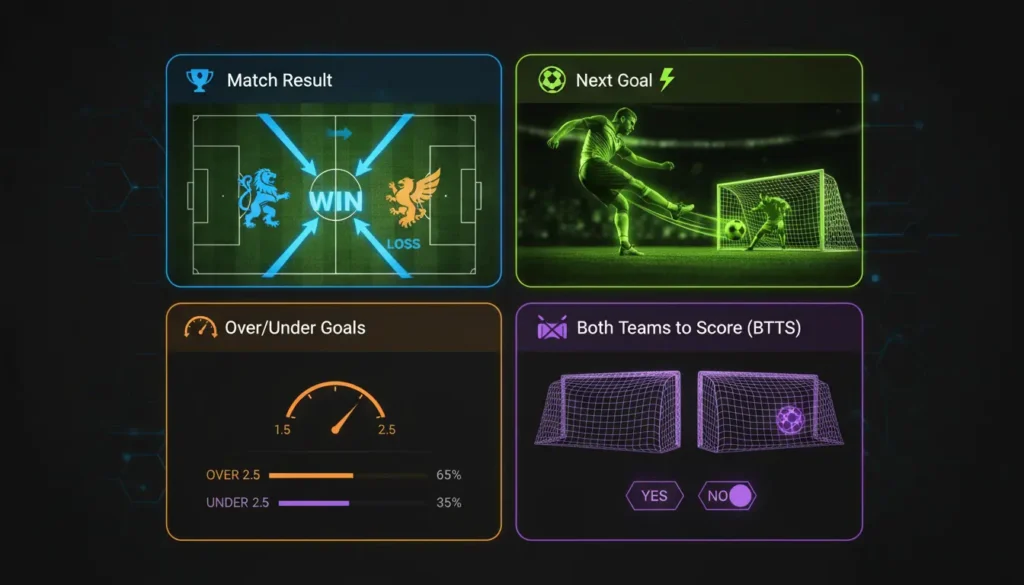
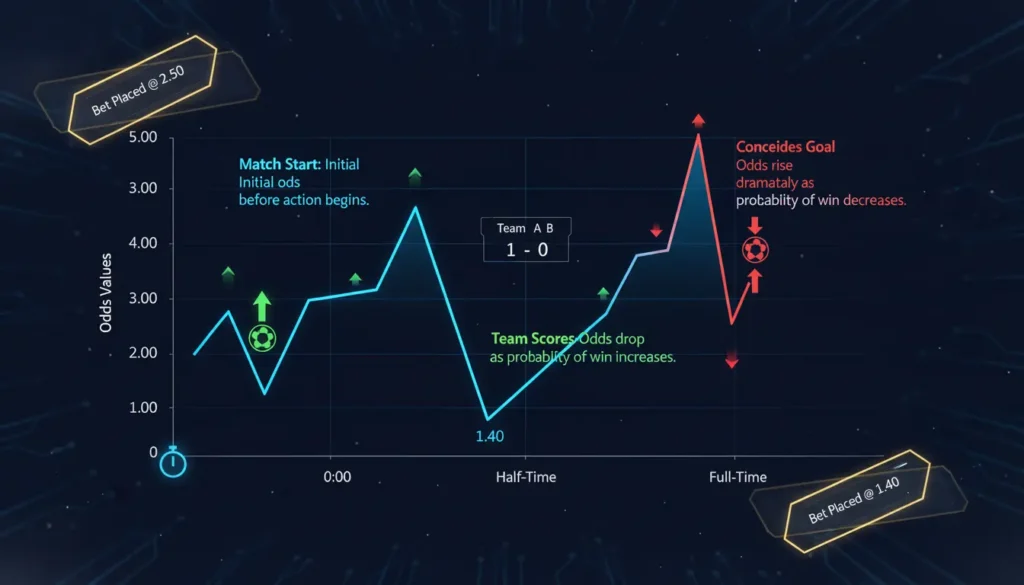
The live match result market is the most straightforward and most liquid in-play option. The odds update constantly as the match progresses, reflecting the current score and remaining time. If the home team is drawing at halftime, their odds to win might be around 2.20. If they then score, those odds crash to 1.40 or 1.50. If they concede instead, the odds drift to 4.00 or 5.00. These movements are predictable but sometimes exploitable when they overcorrect.
The value in live match result betting comes from identifying situations where the odds have moved too far based on short-term events that don’t reflect underlying quality. A strong team that concedes an early goal might see their odds balloon despite still being the better side with seventy-plus minutes to equalize and win. If you believe they’ll recover, the inflated odds offer value that didn’t exist pre-match.
Next goal markets are pure in-play creations that don’t exist before kickoff. You’re betting on which team scores next regardless of when it happens or what the final score becomes. If the match is currently one-nil, you can back the leading team to score next, the trailing team to score next, or no more goals. The odds reflect the current game state, momentum, and remaining time.
Next goal betting rewards reading momentum better than anything else. A team that’s dominated the last ten minutes but hasn’t scored yet is likely to be shorter odds for the next goal than the current score suggests they should be. The market is pricing in their pressure. But sometimes teams dominate possession without creating genuine chances, and the odds don’t fully distinguish between sterile possession and dangerous attacks.
Live over-under markets adjust the goal line as the match progresses. Pre-match might have been over-under 2.5 goals. If it’s nil-nil after thirty minutes and both teams look defensively solid, the bookmaker might offer over-under 1.5 goals instead, with both sides around 1.90. You’re essentially betting on whether the remaining sixty minutes will be high or low scoring based on what you’ve seen so far.
The key insight is that live over-under lines aren’t just mathematical adjustments based on time remaining. They incorporate what’s happened so far. If a match has been end-to-end with chances at both ends but somehow still nil-nil, the over line might be priced more attractively than if it’s been a cagey, defensive affair. Your job is assessing whether the pattern you’ve seen will continue or change.
Live correct score markets offer huge odds on specific outcomes because predicting exact scores is difficult even in-play. But certain score lines become more probable as matches develop. If it’s one-nil with ten minutes left and the trailing team is throwing everyone forward while the leading team looks content to defend, the two-nil and one-one score lines both become more likely than three-nil or nil-two. Reading which score lines are live based on how teams are playing creates value.
Both teams to score is popular in-play because the odds shift dramatically after the first goal. If it’s nil-nil after thirty minutes, BTTS might be around 1.85. If one team scores, BTTS odds lengthen to 2.20 or 2.40 depending on whether the team that scored looks likely to concede. If you believe the trailing team will push forward and create chances, those lengthened odds offer better value than the pre-match price.
Player and team props in-play include things like next player to be carded, team to get the next corner, time of next goal, and various shot markets. These are niche and generally have wider bookmaker margins than mainstream markets, but they can offer value if you have specific insights. If you know a particular player is on a yellow card and prone to rash challenges, his odds to be the next player carded might not fully reflect his risk.
The danger with niche props is they’re often priced inefficiently because bookmakers don’t spend as much time getting them right. Sometimes that inefficiency works in your favor. Sometimes it works against you with terrible odds that no amount of analysis can overcome. The safe approach is sticking to mainstream markets where competition keeps bookmaker margins reasonable.
Cash-out functionality is available on most live bets now, letting you close positions before the match ends. If you backed the home team at 2.50 and they’re now winning one-nil with twenty minutes left, you might be offered cash-out at 1.80. You’re guaranteed a profit right now rather than risking the bet still being open if they concede. Whether to cash out depends on whether you think the remaining match will go your way more than the cash-out odds suggest.
Reading Championship Momentum In Real-Time
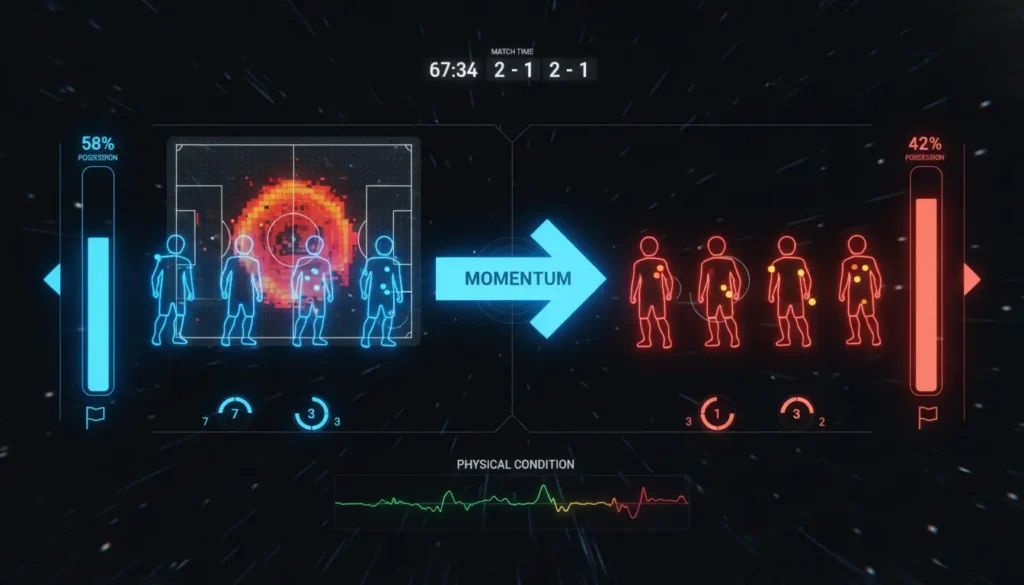
Momentum is one of those concepts everyone talks about but few people properly understand. It’s not just which team is playing better right now. It’s whether the current pattern is sustainable or likely to shift, and what that means for probable outcomes. Reading momentum correctly is the single most valuable skill in live betting.
Visual indicators are your first clue. Which team is winning more aerial duels? Who’s getting to second balls first? Which team’s passes are crisper and more accurate? These are observable patterns that tell you about energy levels, confidence, and control. A team winning physical battles and looking sharp with their passing is probably in good shape even if they haven’t scored yet. A team losing those battles is probably in trouble even if the score is level.
Possession statistics appear on screen during broadcasts but they’re often misleading without context. A team might have sixty percent possession because they’re dominant, or because they’re aimlessly passing sideways while their opponents sit deep and wait to counter. The question isn’t how much of the ball they have but what they’re doing with it and whether they’re creating actual danger.
Shots on target matter more than total shots. A team with ten shots and two on target is throwing hopeful efforts from distance. A team with five shots and four on target is getting into good positions and working the goalkeeper. The efficiency of shooting tells you about chance quality, which predicts future goals better than shot volume.
Corners aren’t a perfect proxy for pressure but they’re useful. A team winning six corners to none is probably dominating territorially. But corners also come from blocked shots and poor crosses, so don’t overweight them. What matters more is where teams are winning corners from. Corners from sustained attacks in the box are different from corners from speculative crosses that defenders head away easily.
Game state changes everything about how to read momentum. When teams are level, both are trying to win. Once someone leads, dynamics shift. The leading team might be happy to sit deeper and protect their advantage. The trailing team needs to push forward and create chances, which opens space for counters. Understanding these tactical adjustments helps you predict whether the momentum pattern will continue or flip.
Substitutions are massive momentum indicators that bookmakers don’t always price in quickly enough. If a team trailing by one goal sends on two attacking players with twenty minutes left, they’re signaling all-out intent to equalize. The tempo will likely increase and chances will come at both ends as they commit more forward. If a team leading by one brings on defensive reinforcements, they’re prioritizing protection over addition, and the match will likely slow down.
The timing of substitutions matters too. Subs in the sixtieth to seventieth minute are usually tactical adjustments. Subs after the eightieth minute are often just running down the clock or giving fringe players minutes. You can ignore late subs unless they’re obviously desperate changes from a team chasing a goal.
Crowd noise tells you things television commentary doesn’t capture. When the home crowd lifts, the home team usually responds with increased intensity. When the crowd goes quiet after an away goal, home momentum often drains. If you’re watching on television with crowd audio, pay attention to the atmosphere. It’s a real factor in Championship matches where stadiums are tighter and supporters are closer to the pitch than in modern Premier League grounds.
Physical condition becomes visible as matches progress, especially in fixture-congested periods. Players start getting to balls a half-second slower. Passes that were crisp in the first half get sloppy in the second. Defensive positioning becomes less organized. Tired teams make mistakes that create chances for their opponents. If one team looks noticeably fresher than the other past the hour mark, that’s a significant edge for the remaining thirty minutes.
Injuries and knocks affect momentum even when players stay on. A key defender carrying a knock becomes a target for the opposition to exploit. A striker who’s hobbling won’t make the same runs. If a crucial player is clearly compromised but hasn’t been substituted, that changes the match’s balance even if the broadcast hasn’t highlighted it yet.
Tactical adjustments take several minutes to implement fully. When a manager changes formation or approach, there’s usually a five to ten minute transition period where the team is still figuring out their new structure. During this window, they’re often vulnerable as they adjust. Betting against teams immediately after major tactical changes can offer value if you believe the disruption will cost them before the new approach settles in.
Proven Live Championship Betting Strategies
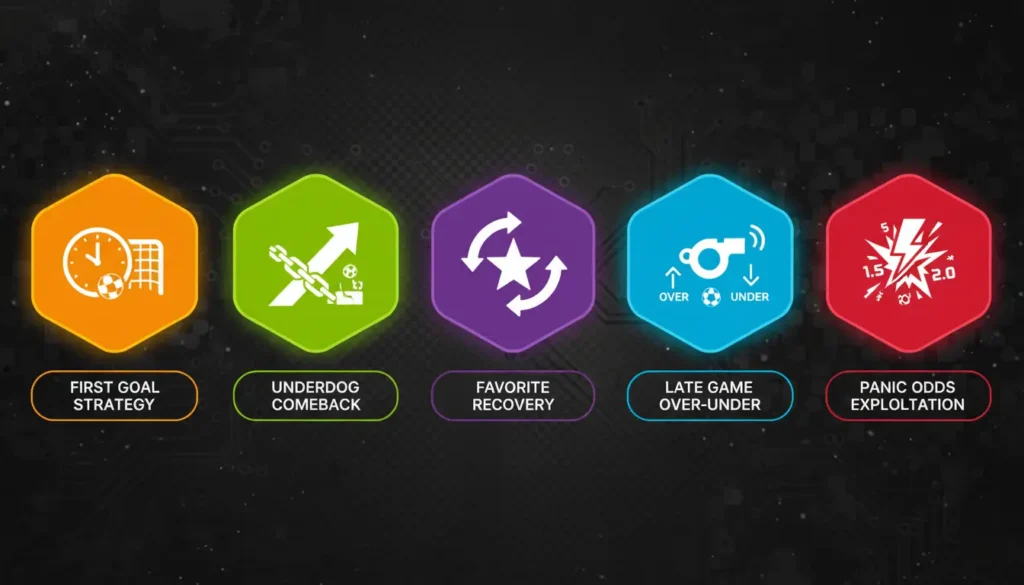
The wait-for-first-goal strategy is possibly the most reliable in-play approach. Pre-match odds are set based on predictions. Once a goal goes in, odds shift dramatically based on new reality. These shifts often overcorrect, creating value in the opposite direction. If a strong favorite concedes first to a heavy underdog, the favorite’s odds to win might balloon from 1.40 to 3.50 despite them still being the better team with most of the match remaining.
The key is distinguishing between goals that reflect genuine momentum versus goals that are fluky or against the run of play. If the underdog scored from their first attack after the favorite dominated the opening twenty minutes, that’s different from the underdog outplaying the favorite and deserving their lead. Against-the-run-of-play goals create the biggest overreactions in odds and the best value opportunities.
Similarly, when favorites score first, their odds crash as everyone assumes they’ll cruise. But one-goal leads are fragile in the Championship. Teams don’t give up. If you believe the underdog will keep fighting and potentially equalize, backing them at longer odds after conceding offers better value than their pre-match price. The market overreacts to single goals, especially early ones.
Underdog comeback betting is a specific application of this principle. When an underdog goes behind early, their odds to win balloon massively. They might go from 5.00 pre-match to 12.00 or 15.00 after conceding. But Championship underdogs come back regularly, especially at home where crowds push them forward. If you think the underdog has quality and fight, their inflated odds after going behind represent huge value compared to pre-match.
The critical factor is timing. The best value comes immediately after the goal when odds are most inflated and before the match settles into a new pattern. Wait too long and the market adjusts. Wait through a few attacks from the trailing team without them scoring and their odds drift even longer, but by then you’ve missed the best entry point.
Favorite recovery plays work inversely. When a favorite goes behind, panic sets in. Their odds to win lengthen dramatically. But good teams with strong mentalities often equalize and go on to win. If you believe in the favorite’s quality and they’re playing reasonably well despite being behind, their lengthened odds offer value. You’re essentially getting better odds on the same team you might have considered backing pre-match.
The risk is when favorites go behind because they’re genuinely being outplayed rather than just being unlucky. If the underdog is dominating physically and tactically, the favorite might not have it in them to turn it around. Reading whether the favorite is unlucky or outclassed determines whether recovery plays offer value or are just throwing money at a losing cause.
Late-game over-under strategy targets the final twenty minutes when patterns are clearest. If a match is one-nil or one-one and both teams are going for it, the likelihood of more goals in the final twenty minutes is reasonably high. Bookmakers adjust the over-under line but sometimes not enough to fully account for the open nature of the match. Backing overs in genuinely end-to-end affairs where both teams need goals can provide better value than the pre-match over line.
Conversely, if a team is protecting a one-goal lead and successfully slowing the match down, unders become attractive. They’re making substitutions to waste time, winning free kicks and taking forever on them, keeping the ball in corners. The match is dying as a spectacle but that’s exactly when under bets cash. The bookmaker’s line assumes some possibility of action but you’re watching the team actively kill the match.
Exploiting panic odds movements happens when something dramatic shifts the match and the market overreacts. A red card is the classic example. When a team goes down to ten men, their odds worsen dramatically. But the timing and context of the red card matter enormously. A red card in the tenth minute gives eighty minutes for the numerical advantage to matter. A red card in the eightieth minute barely matters. Yet odds often overreact to red cards regardless of timing.
Similarly, red cards for the team that’s already winning sometimes help them more than hurt them. They drop deeper, become more compact, and make life harder for the opposition despite being down a player. If you think the ten men will successfully defend their lead, their odds after the red card might actually offer value because the market has overpriced the disadvantage.
The red card strategy specifically involves identifying situations where the numerical disadvantage is overpriced. This usually means late red cards, red cards in defensive positions that don’t hugely impact team shape, or red cards to teams with strong defensive organization that can absorb pressure. You’re fading the public’s assumption that ten men always means imminent collapse.
Live Betting Technology and Tools

The quality of your live betting technology directly impacts your results. You need fast, reliable streams with minimal delay, intuitive betting interfaces that let you place bets quickly, and ideally statistical feeds that show you data in real-time. The difference between a three-second stream delay and a thirty-second delay is enormous when odds are updating constantly.
Many bookmakers offer live streaming to customers with funded accounts or who’ve placed bets recently. This solves the synchronization problem because your video and odds come from the same source. You’re seeing exactly what the bookmaker’s traders see at the same time they see it. This eliminates the paranoia of wondering whether your stream is so far behind that the odds already reflect events you’re about to see.
Third-party streaming services are alternatives but introduce delay risk. Even reputable streams lag behind real-time by several seconds up to a minute. If your stream is thirty seconds behind and you see something you want to bet on, the odds might have already moved by the time your bet goes in. Some bettors use radio commentary plus visual streams to minimize delay since radio is typically faster than video, but this requires coordinating two information sources simultaneously.
Statistical feeds showing shots, possession, corners, and other metrics in real-time help you assess matches when you can’t watch them visually. Sites like Flashscore or SofaScore provide live stats that update every few seconds. These aren’t substitutes for watching but they’re better than nothing if you’re following multiple matches or can’t access streams. The stats help you confirm whether your pre-match analysis is playing out as expected.
Mobile betting apps are essential for live betting because matches happen at inconvenient times and you won’t always be at a computer. The best apps provide intuitive interfaces for in-play markets, quick bet placement with minimal clicks, and reliable performance without crashes. Testing apps before betting real money helps you understand their interfaces so you’re not fumbling through menus during crucial moments.
Cash-out functionality has become standard but implementation varies wildly between bookmakers. Some offer generous cash-out values that reflect fair market odds. Others offer terrible values that are barely worth considering. Some provide partial cash-out letting you take some profit while leaving part of the stake running. Understanding your bookmaker’s cash-out terms before you need them prevents disappointment when you try to cash out and realize the offered value is awful.
Live stats overlays on streams show you possession, shots, and other metrics without leaving the video feed. Some bookmakers integrate stats directly into their streaming interfaces. If yours doesn’t, running stats on a second screen or split-screening your device gives you visual and statistical information simultaneously. The combination helps you assess whether the team dominating possession is actually creating danger or just having the ball without threat.
Bet tracking during matches matters because it’s easy to lose track of positions when you’re placing multiple live bets. Knowing exactly what you’ve bet, at what odds, and what outcome you need helps you make informed decisions about whether to hedge, cash out, or place additional bets. Some bettors keep notes during matches, others rely on bet history in their account, but having clarity about your positions is essential for rational decision-making.
Multiple bookmaker accounts give you the ability to compare in-play odds and take the best available prices. Just like pre-match betting, different bookmakers offer different in-play odds on the same events. Having accounts at three to five bookmakers lets you shop for the best odds even during matches. This requires more management but the improved odds compound over dozens of bets into meaningfully better returns.
Common Live Betting Mistakes to Avoid
Chasing losses in-play is the fastest way to destroy your bankroll. You bet on a match, it doesn’t go your way, you’re losing money in real-time, and the urge to bet more to recover is overwhelming. So you make another bet, probably at worse odds and with less analysis than your first bet. That loses too. Now you’re even deeper and the spiral continues. This is how recreational bettors blow through entire bankrolls in a single afternoon of Championship football.
The solution is strict bankroll management and pre-determined staking plans. Decide before the match day how much you’re willing to risk in live betting and stick to it regardless of results. If you hit that limit, you’re done. No exceptions. The matches will be there next week. Your bankroll won’t be if you chase losses without discipline.
Betting on gut feeling rather than analysis happens constantly in live betting because the pace creates pressure to act fast. You see something happen, have an immediate emotional reaction, and bet before thinking it through properly. Sometimes this works. Usually it doesn’t. The bets that win long-term are based on reasoning you can articulate, not vague feelings that you can’t explain.
Before placing any live bet, pause and ask yourself what your reasoning is. Can you state clearly why you believe the odds are mispriced? If you can’t articulate the logic, you probably shouldn’t be betting. This discipline of forcing yourself to reason before acting counteracts the impulse to bet everything that moves during matches.
Ignoring game context costs people money when they bet based on the score line without understanding how the match reached that score. A nil-nil scoreline tells you nothing about whether the match has been boring and defensive or end-to-end with chances at both ends. A one-nil scoreline doesn’t tell you if the goal was deserved or a fluke. Context matters more than the numbers on the screen.
Watching the match, or at minimum following detailed live commentary, is essential for contextual understanding. Betting on matches you’re not following closely is essentially gambling on randomness. You might get lucky occasionally but you have no sustainable edge. If you’re not willing to invest attention in following matches properly, you shouldn’t be betting them in-play.
Over-betting live markets happens because the options are endless and constantly changing. New markets appear every few minutes. Odds update constantly. The variety and movement create action addiction where you’re betting because betting is available rather than because genuine value exists. This is gambling for entertainment rather than betting for profit.
Successful live bettors are selective. They watch matches and wait for specific situations they’ve identified as offering value. They might watch an entire match and place one bet, or no bets if the right situations don’t materialize. They’re not betting constantly just because they can. The discipline to not bet most of the time is what allows them to bet profitably when genuine opportunities appear.
Not using cash-out wisely is common among bettors who either cash out too quickly and leave profit on the table, or refuse to cash out when they should and let winning positions turn into losses. Cash-out is a tool. Like any tool, it’s valuable when used appropriately and counterproductive when misused. The key is understanding when cash-out makes mathematical sense versus when it’s driven by emotion.
Cash out when you’ve changed your assessment of the match. If you backed the home team but they’re now playing terribly despite being ahead, cashing out protects profit before they concede. Don’t cash out just because you’re nervous. Don’t refuse to cash out just because you want maximum profit. Make decisions based on what you believe will happen in the remaining match time versus what the cash-out odds imply.
Action addiction in live betting is real and insidious. The combination of watching matches, having money riding on outcomes, making fast decisions, and seeing immediate results triggers the same dopamine responses as slot machines. It feels exciting and engaging. But that excitement is expensive if you’re not actually making +EV bets. Recognize when you’re betting for entertainment versus profit and be honest with yourself about which motivates your live betting activity.
Live betting should enhance your enjoyment of matches through strategic engagement with favorable odds, not destroy your bankroll through compulsive action-seeking. If you’re betting every match every weekend and losing money consistently, you’ve probably crossed from strategic betting into entertainment gambling. That’s fine if you treat it as entertainment spending rather than expected profit, but don’t confuse the two.
React to the match from our Championship live portal.