
L'impact de la météo sur vos paris
 Available in US
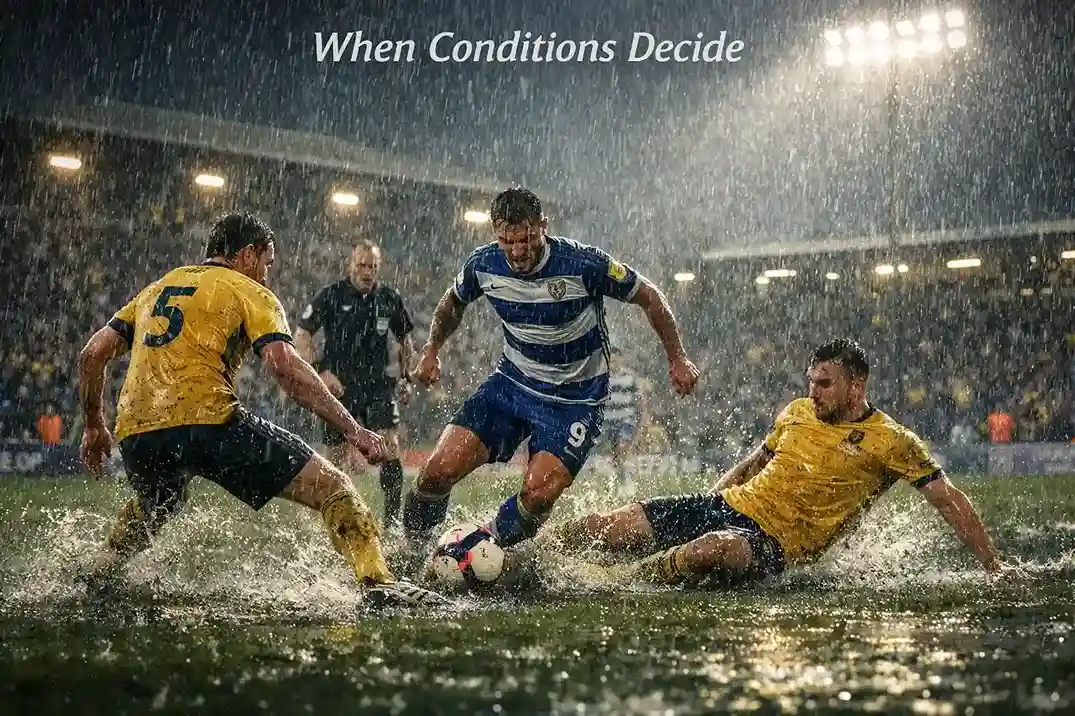
Weather represents one of football betting’s most underutilized analytical factors. While bettors scrutinize team form, injury news, and historical head-to-head records, they frequently overlook how rain, wind, cold, and pitch conditions fundamentally alter match dynamics. In the Championship, where matches proceed through English winters that Premier League clubs increasingly escape through undersoil heating and covered stadiums, weather effects remain pronounced and exploitable.
The Championship’s autumn-to-spring schedule guarantees significant weather variation across the season. September fixtures might feature dry, firm pitches where technical football flourishes. December matches often occur on saturated surfaces where long balls replace intricate passing. March games can feature anything from spring warmth to late-winter freezes. This variation creates prediction opportunities for bettors who incorporate meteorological factors into their analysis.
What makes weather particularly valuable analytically is its objective measurability combined with consistent effects. You can check forecasts with reasonable accuracy, and weather impacts on football follow predictable patterns. Rain favors direct play. Wind disrupts aerial balls. Cold affects player mobility. These relationships, while not deterministic, shift probabilities in ways that baseline analysis might miss.
Use this info when betting on individual players like the first goalscorer market.
Table of Contents
Rain and Pitch Conditions
Rainfall before and during matches affects playing surfaces in ways that systematically influence results and totals. Understanding these effects helps adjust betting expectations appropriately.
Wet pitches accelerate ground passes while making ball control more difficult. Teams relying on quick, technical combinations might struggle when the ball skids unpredictably off sodden surfaces. Sides preferring direct play gain advantages as long passes skip through to forwards faster than on dry pitches. This dynamic shifts match characteristics toward unpredictability that can increase goal probability at both ends.
Heavy rainfall during matches creates chaotic conditions where individual errors become more likely. Goalkeepers fumbling wet balls, defenders slipping during crucial challenges, and midfielders losing possession through mistimed touches all increase as rain intensifies. These error-driven goals mean both teams face elevated concession probability regardless of defensive quality.
Saturated pitches from prolonged rain periods affect teams asymmetrically based on playing styles. Possession-based sides struggle to execute their preferred approaches when surfaces prevent controlled passing. Direct teams whose approaches depend less on surface quality gain relative advantages. Identifying which Championship sides will struggle or thrive on heavy pitches helps predict results that dry-pitch form might not indicate.
Wind Effects on Match Dynamics

Strong winds represent perhaps the most underappreciated weather factor in football betting. Wind disrupts the aerial dimension of football in ways that alter tactical effectiveness and introduce unpredictability that standard analysis cannot capture.
Long passing accuracy diminishes significantly in windy conditions. Balls intended for distant teammates drift off course, turning attacks into turnovers. Teams relying on switching play through diagonal passes struggle when wind makes these balls unpredictable. Shorter, ground-based approaches gain relative effectiveness when aerial options become unreliable.
Crossing and delivery quality suffers in strong winds. Wide players whose effectiveness depends on accurate crosses into dangerous areas find their deliveries swirling unpredictably. Defending against crosses becomes easier when attackers cannot place balls precisely. This dynamic affects corner and set-piece effectiveness, potentially suppressing scoring from situations that normally prove productive.
Goalkeeping becomes more challenging in gusty conditions. High balls behave unpredictably, making judgments about whether to come for crosses more difficult. Goal kicks and long clearances might fall short or sail unexpectedly long. These uncertainties can produce unusual goals from situations that would normally be routine.
Temperature and Physical Demands
Temperature extremes affect player performance in ways that influence match outcomes and characteristics. While English winters rarely reach debilitating extremes, cold conditions and occasional heat create observable effects.
Cold temperatures increase injury risk and reduce player mobility. Muscles that haven’t warmed sufficiently tear more easily, while hamstring and groin strains become more common in cold conditions. These injury risks might manifest as early substitutions that disrupt team balance. Cold also reduces the explosive movements that create attacking opportunities, potentially suppressing goal totals.
The Championship’s occasional warm-weather matches, typically early and late season, can affect teams with limited squad depth more severely. When temperatures rise, fitness levels become more determinative. Teams whose conditioning proves inadequate fade late in matches, creating in-play opportunities for those who’ve identified physical disparities.
Seasonal fitness patterns mean early-season matches often feature players not yet at peak condition, while late-season fatigue accumulates regardless of temperature. Weather exacerbates these baseline fitness variations, magnifying advantages for better-conditioned sides.
Tactical Adaptations to Weather
Smart managers adapt tactics to weather conditions in ways that affect betting markets. Understanding likely tactical responses helps predict how weather will influence specific fixtures.
Direct approach adoption in poor conditions sees technical teams abandoning preferred passing styles for more route-one football. When weather makes ground passing risky, even possession-oriented sides start playing longer. This tactical convergence can reduce the effectiveness gaps between technical and direct teams, potentially producing upset results.
Set-piece emphasis increases when open play becomes difficult. Teams with strong aerial presence might target corners and free kicks more deliberately when weather disrupts normal attacking patterns. This emphasis shifts goal-scoring probability toward teams with physical advantages regardless of technical quality gaps.
Defensive caution increases when conditions create unpredictability. Managers recognizing weather-induced chaos might prioritize defensive solidity over attacking ambition. These conservative approaches can suppress goal totals despite the individual error probability that weather creates.
Incorporating Weather Into Betting Analysis
Translating weather awareness into betting decisions requires systematic approaches that objectively adjust baseline predictions.
Forecast checking should become routine pre-match preparation. Weather services provide hourly predictions for specific locations, allowing assessment of conditions during match times rather than generic daily forecasts. Checking forecasts for stadium locations specifically, rather than nearby cities, improves accuracy.
Playing style assessment determines how weather will affect specific teams. Identify whether sides prefer ground-based or aerial approaches, technical combinations or direct play. Match these profiles against expected conditions to predict which teams will gain or lose relative advantages.
Historical weather performance analysis reveals how teams have handled similar conditions previously. Some sides adapt well to poor weather while others struggle regardless of quality. These historical patterns, where sufficient data exists, provide baseline expectations for weather-affected fixtures.
Market-Specific Weather Effects
Different betting markets respond to weather factors in distinct ways. Understanding which markets weather most affects helps target positions appropriately.
Goal totals often decrease in extreme weather as tactical caution combines with execution difficulties. However, individual error probability increases, creating goals from unusual sources. The net effect varies but typically trends toward under in truly severe conditions while producing variance increases in moderate weather.
Match result markets shift toward underdogs in poor weather. When conditions suppress the execution quality that separates teams, competitive balance increases. Technical superiority matters less when surfaces prevent technical football. These effects can make backing underdogs or draws more attractive during weather-affected fixtures.
Corner markets respond to weather inconsistently. Wind might reduce corners by making wide play less effective, or increase them as poor deliveries get blocked. Rain might increase corners through chaotic attacks or decrease them through cautious approaches. Weather effects on corners prove less predictable than on other markets.
Common Weather Betting Errors

Recognizing and avoiding common mistakes around weather-affected betting improves results. These errors recur because weather analysis requires different frameworks than standard form assessment.
Overreacting to forecasts that might prove inaccurate leads to positions based on conditions that don’t materialize. Weather forecasts become less reliable beyond 24-48 hours. Position accordingly and adjust as forecasts update closer to kickoff.
Assuming weather affects all teams equally ignores the asymmetric impacts that create betting value. Weather doesn’t simply make matches more random; it systematically advantages certain playing styles over others. Identify these asymmetries rather than treating weather as generic noise.
Ignoring weather entirely represents the most common error. Most bettors never check forecasts despite weather’s demonstrated effects on match characteristics. Simply incorporating weather consideration, even imperfectly, provides analytical advantage over those who overlook it entirely.
Championship weather betting rewards those willing to incorporate additional analytical dimensions. The information is freely available and the effects are real, yet most bettors continue ignoring conditions that meaningfully influence outcomes.
Monitor match environments on our betting dashboard.