
Parier sur les buts en live
 Available in US

Live goals markets offer some of Championship betting’s purest opportunities, stripping away team allegiance to focus on the fundamental question of how many goals remain in any given match. Whether backing over or under specific totals, these markets reward those who can read match dynamics and predict scoring rates more accurately than real-time odds suggest. The Championship’s attacking nature, with its league average hovering around 2.45 goals per match, creates active goals markets where lines continuously adjust as matches unfold.
What distinguishes successful live goals betting from mere speculation is the integration of multiple information streams. Scoreline provides the obvious starting point, but pre-match expectations, first-half performance metrics, team-specific patterns, and visible match dynamics all contribute to probability assessments that accurate interpretation can exploit. Markets incorporate this information imperfectly, creating windows where bettors processing evidence more accurately can identify value.
The Championship’s competitive balance particularly suits live goals markets. Unlike top-flight football, where quality gaps often produce predictable scoring patterns, Championship matches frequently deviate from expectations as evenly matched teams produce open contests. This unpredictability keeps goals markets active throughout matches, with lines shifting based on emerging evidence that creates continuous opportunity.
Maximize your returns by using Championship betting exchanges for better liquidity.
Table of Contents
Understanding Live Goals Market Mechanics
Live total goals markets typically center on the 2.5 threshold, asking whether remaining goals will push totals above or below this line. As matches progress and goals occur, lines shift to new thresholds that reflect current scoreline and remaining time. Understanding how these mechanics operate helps identify when odds fail to accurately represent goal probability.
Pre-match expectations establish baseline assessments that in-play evidence modifies. A match priced at 2.20 for over 2.5 goals pre-match carries different in-play implications than one priced at 1.65. When early goals arrive in matches where under was expected, bookmakers adjust dramatically but sometimes overreact. When expected goals haven’t materialized despite open play, over prices might drift beyond justified levels.
Time remaining fundamentally shapes live goals pricing. The same scoreline carries different over/under implications at different match stages. A 1-1 scoreline at halftime might see over 2.5 priced around 1.70, while the same scoreline at seventy minutes might see over priced at 2.50. These time-based adjustments follow predictable patterns that understanding goal timing distributions can exploit.
Goal expectancy calculations underpin live market pricing but rely on assumptions that specific match contexts might contradict. Standard models assume consistent scoring rates, but actual matches produce goals in clusters and bursts that statistical smoothing obscures. Recognizing when current match dynamics suggest different scoring patterns than models assume creates edges.
Factors Influencing Live Goal Probability

Multiple factors combine to determine how many goals remain in any Championship match. Identifying which factors most strongly influence specific situations improves live goals betting accuracy.
Current scoreline shapes incentives that affect goal probability. Teams trailing need goals and typically push forward, creating open matches where both teams might score. Teams leading comfortably often consolidate, reducing expected goals from both sides. These incentive structures, visible in tactical approaches, suggest goal expectations that scoreline alone cannot capture.
Match tempo and openness provide immediate evidence of goal likelihood. Matches featuring end-to-end action, frequent shots, and defensive disorganization produce goals at rates exceeding statistical averages. Cagey encounters with minimal chances suggest under probabilities that open-play assessments wouldn’t capture. This qualitative dimension requires watching matches or accessing detailed live statistics.
Fitness levels visible during matches predict late-game goal probability. Teams showing fatigue become defensively vulnerable, particularly during fixture-congested periods when recovery time proves insufficient. Championship seasons’ 46-match demands create cumulative tiredness that manifests in late-game lapses. Observing physical condition helps predict whether closing minutes will produce the goals that tired defending often allows.
Timing Strategies for Live Goals Betting
When you enter live goals markets significantly impacts both odds available and expected value. Different situations warrant different timing approaches that optimize returns.
Early in matches, prices remain closest to pre-match assessments, adjusting gradually as evidence accumulates. If your pre-match analysis suggested goals but you missed the opening odds, early minutes might still offer value before events confirm or contradict expectations. This early-match window suits those whose research identifies likely goal-heavy fixtures regardless of opening prices.
Post-goal moments create rapid odds movements that sometimes overshoot fair value. An early goal in a match priced for under might push over odds to levels that expected remaining goals don’t justify. Conversely, goalless periods might see under odds shorten beyond value as markets react to absence rather than assessing remaining probability. These post-event windows, though brief, concentrate value for those positioned to act quickly.
Late-game situations offer distinctive opportunities based on scoreline and time remaining. Matches at 1-1 in the eightieth minute might see over 2.5 priced at long odds that don’t reflect the desperation of teams needing victory or the openness that chase creates. Understanding how specific scoreline-time combinations produce goals helps identify late-game value.
Reading Match Dynamics for Goals Betting
Interpreting what you’re watching, whether directly or through statistics, determines live goals betting success. Several indicators help predict remaining goal probability more accurately than current odds suggest.
Shot frequency and quality indicate offensive threat levels. Teams creating numerous high-quality chances without scoring might finally convert, suggesting over value. Teams struggling to create despite possession might continue finding goalscoring difficult, supporting under assessments. These attacking metrics, increasingly available in real-time, provide evidence beyond scoreline.
Defensive stability observations predict vulnerability. Teams whose defensive shape has held throughout might continue frustrating opponents. Those showing organizational problems, whether through individual errors or structural weakness, face elevated goal probability regardless of current scoreline. This defensive dimension receives less attention than attacking metrics but equally influences goal expectation.
Tactical changes signal intention that affects goal probability. Attacking substitutions from trailing teams increase goal expectation for both sides as the chasing team pushes forward and exposes space. Defensive reinforcement from leading teams decreases expectation as consolidation priorities take hold. Reading these tactical messages helps predict direction of goal probability movement.
Championship-Specific Goals Patterns
The Championship produces distinctive goals patterns that inform live betting strategies. These patterns differ from other leagues and create specific opportunities.
Late goals occur more frequently in the Championship than in more cautious leagues. The physical demands of the season create fatigue that opens matches up after the seventieth minute, particularly during fixture-congested periods. This late-goal tendency creates systematic over opportunities in closing minutes that scorelines at seventy minutes might not suggest.
Teams trailing at halftime pursue equalisers with greater intensity than Premier League equivalents, whose quality gaps often make comebacks improbable. This pursuit opens Championship matches up, creating second-half goals that first-half patterns wouldn’t predict. Understanding this comeback culture helps identify over opportunities at halftime in matches where trailing teams possess genuine attacking threat.
Defensive quality varies more dramatically across Championship teams than in the top flight. Some sides concede regularly regardless of opposition, while others maintain organization that frustrates even strong attacks. Knowing which teams fall into which category helps predict goal probability more accurately than generic Championship averages suggest.
Bankroll Management for Live Goals Betting
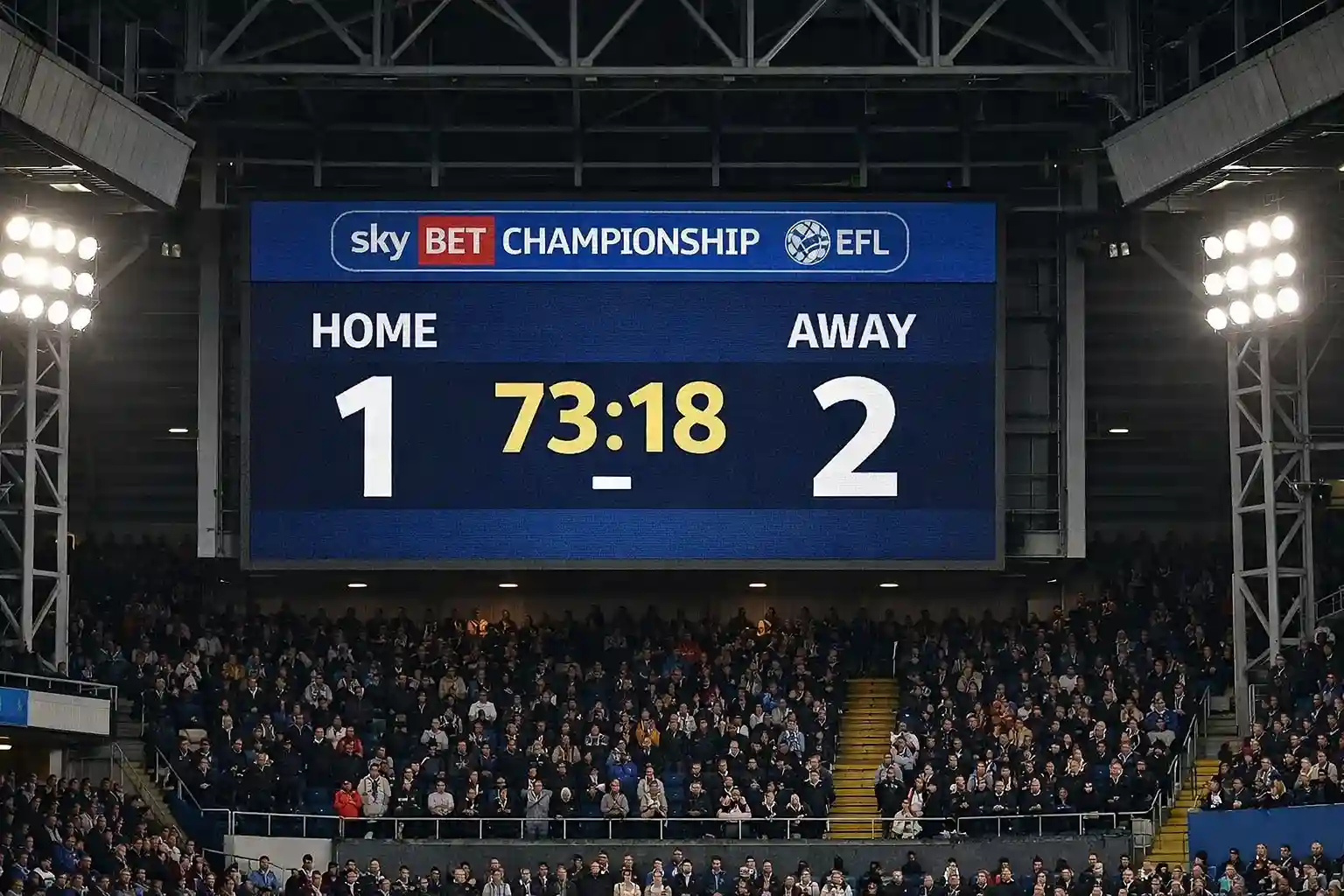
Live goals markets demand specific bankroll approaches that reflect the continuous decision-making these markets involve. The temptation to bet frequently requires disciplined frameworks.
Stake consistency matters more than in pre-match betting. The frequency of live goals opportunities can lead to escalating stakes as bettors chase returns or attempt to recover losses. Maintaining consistent stake sizes regardless of recent results preserves bankrolls through inevitable variance.
Session limits prevent the compounding losses that continuous markets enable. Setting maximum losses per match, or per betting session, creates circuit-breakers before significant damage occurs. These limits should be established in advance and adhered to regardless of perceived opportunity.
Track results meticulously across different situations. Your accuracy might vary between over and under bets, between first-half and second-half markets, or between high-scoring and low-scoring expected matches. Understanding where your strengths lie helps concentrate betting on situations where your analysis adds genuine value.
Common Live Goals Betting Errors
Recognizing and avoiding common mistakes improves long-term profitability in live goals markets. These errors recur because the continuous nature of these markets encourages impulsive decisions.
Overreacting to scoreline changes destroys value. An early goal doesn’t guarantee goal-heavy matches, just as goalless periods don’t confirm low-scoring outcomes. Markets often overreact to individual goals, creating counter-value for those maintaining perspective on overall match dynamics.
Betting without understanding baseline expectations leads to mispriced assessments. Knowing pre-match expected goals for each fixture provides context for evaluating in-play developments. Without this baseline, in-play betting becomes reactive rather than strategic.
Ignoring time remaining leads to poor value assessment. The same scoreline carries different implications depending on minutes remaining. A 2-1 scoreline at sixty minutes offers different over/under probability than the same scoreline at eighty-five minutes. Integrating time into every assessment improves live goals betting accuracy substantially.
Live goals markets reward those who combine systematic match reading with disciplined execution. Understanding how Championship-specific patterns affect goal timing, identifying situations where odds diverge from likely outcomes, and maintaining rigorous bankroll management transforms continuous market access into sustainable profit opportunity.
Bet on the next goal from our EFL wagering hub.